Qualification should help the customer reach the right person
A WhatsApp qualification flow collects enough information to route an inquiry and prepare the next step. It should not become a long interrogation or automatically reject people because one answer is missing. The purpose is to improve relevance and sales preparation while respecting the customer's time.
Start with Botinx forms, automation and the shared inbox. Define what your sales team needs to know before a useful conversation. For a service company, that may be the problem, location and timing; for software, it may be the workflow, team size and integration requirement.
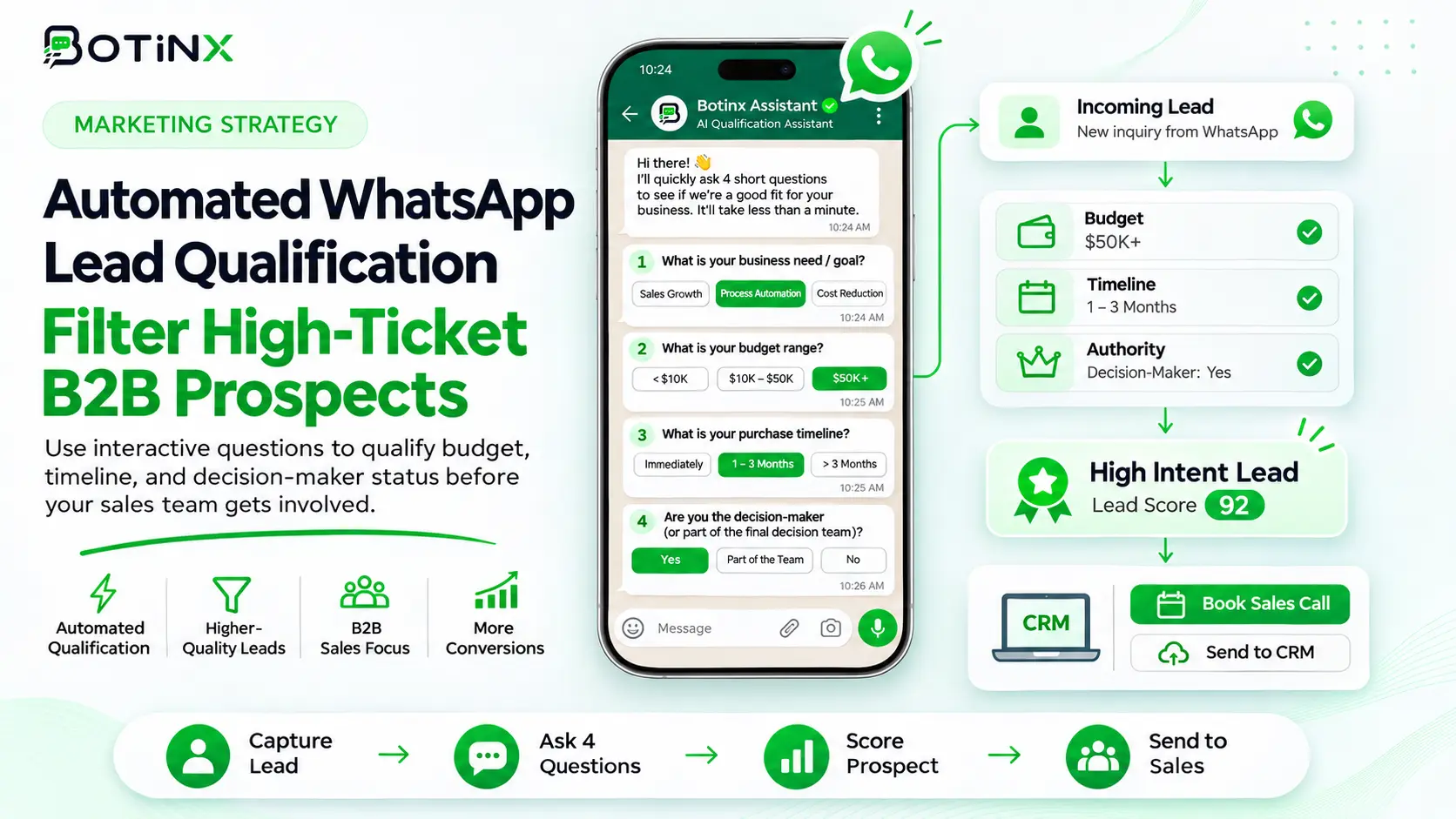
Design four questions with a clear purpose
Need: “What would you like help with?” Offer a small set of meaningful options and a way to describe another requirement.
Fit: Ask a question that affects whether you can deliver, such as service location or the existing system that must connect.
Timing: “When are you hoping to get started?” Use the answer to prioritize follow-up, not to dismiss someone who is researching.
Next step: Ask whether the person wants a product answer, a quote or a conversation with the team. Budget can be useful in some businesses, but explain why it matters and avoid demanding it before providing basic information.
Use an explainable scoring model
Start with a simple model that the sales team can inspect. For example, give points for a supported use case, a near-term timeline and a requirement your team can meet. These are suggested design factors, not a universal scoring formula. Set thresholds using your own sales process and review them after observing outcomes.
Keep “unknown” separate from “not a fit.” A missing budget answer is not proof that a prospect cannot buy. Do not infer sensitive personal characteristics from wording or names. Record the answers and the reason for the score so a salesperson can override an incorrect classification rather than accepting a hidden automated judgment.
Route by fit and ownership before urgency alone
Assign the lead to the team that can actually address the need. Location, product specialization and existing account ownership may matter more than a high numerical score. If an existing customer asks for support, route them to support rather than treating every interaction as a new sales opportunity.
Pass the answers and original question to the agent. A helpful handover might say: “Interested in order-update automation; uses Shopify; wants to start next month; asked about keeping the Business App.” This gives the salesperson context without forcing the customer to repeat the conversation. Use Botinx's inbox to evaluate assignment and visibility.
Make booking and CRM actions explicit
If you offer a booking link, distinguish opening the link from a confirmed appointment. Only confirm a meeting after the scheduling system reports the booking. Handle timezone and rescheduling information through the configured booking process rather than an AI guess.
For CRM updates, map fields deliberately and use stable identifiers to prevent duplicate leads. Decide how a new inquiry updates an existing record. If a write fails, keep a visible review item instead of telling the customer that everything is complete. A prompt asking AI to “update the CRM” is not a substitute for an authorized integration.
Use AI for explanation, structured flows for required data
AI can help interpret a customer's description and answer approved product questions. Structured questions are useful when specific fields are required for routing or a quote. Combine them so the customer can ask a natural question without losing the overall purpose of the flow.
If the assistant is uncertain, ask a clarifying question or hand over. Do not invent a budget, company size or purchase timeline to complete a form. When a person asks for a human, respect the request. In Botinx, human ownership should pause competing automated responses until the conversation is explicitly resolved or closed.
Test the customer paths that can be overlooked
Test a high-fit lead, a low-fit inquiry, a missing answer, a customer who changes an answer and someone who immediately requests a person. Include repeated form submissions and an existing contact returning with a new requirement. Check that the final CRM record and assignment match the conversation.
Also test after-hours behavior and an unavailable booking integration. Provide a truthful next step rather than promising an immediate call or a confirmed slot. Keep the flow short enough that the customer can finish it without unnecessary effort. Review abandonment at each question to identify where wording or data requests create friction.
Measure sales usefulness rather than form completion alone
Track started flows, completed flows, correctly routed leads, accepted opportunities and eventual sales. Ask salespeople whether the collected information reduced preparation time and whether the scoring reflects real fit. A completed questionnaire is not automatically a qualified opportunity.
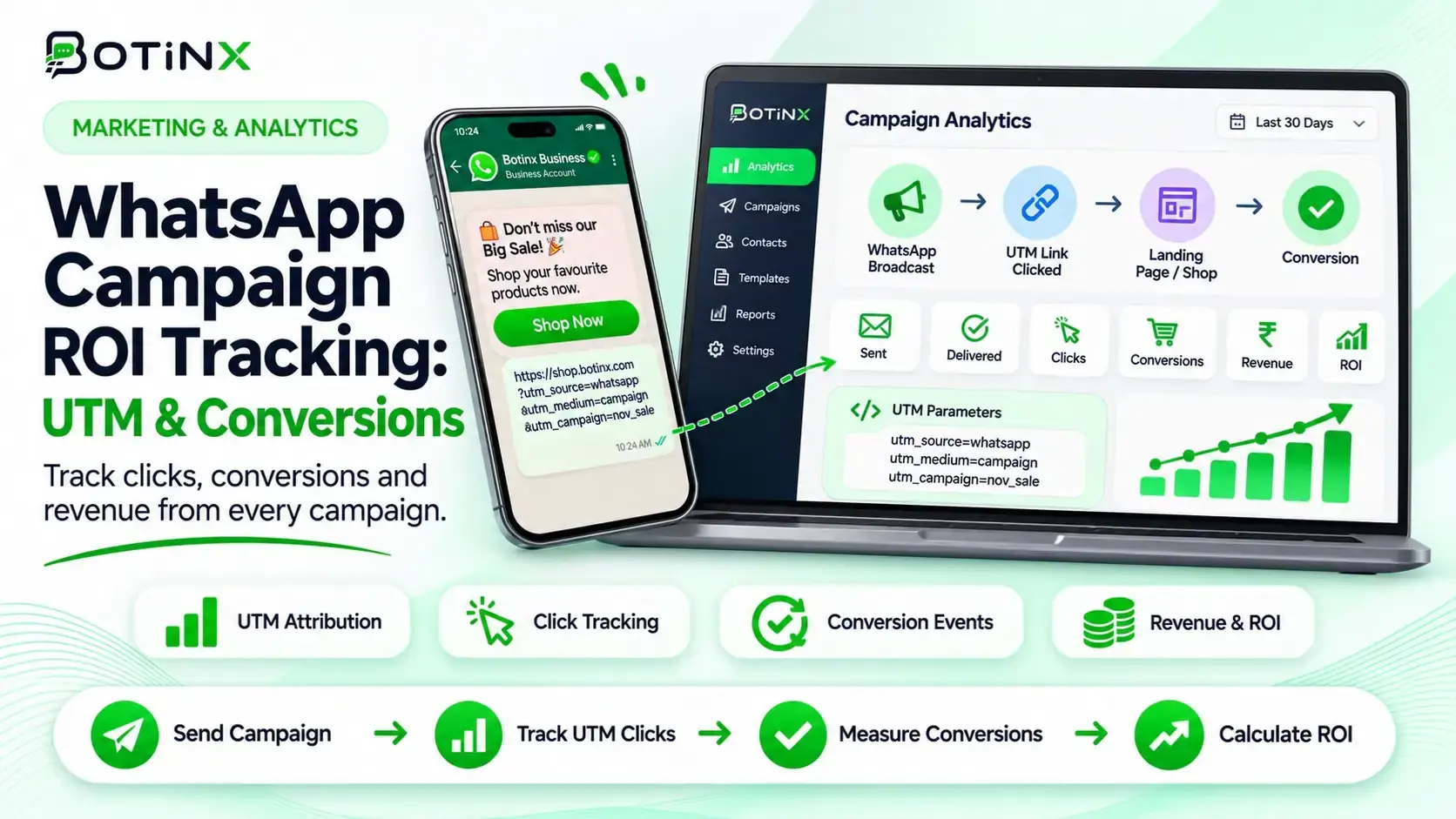
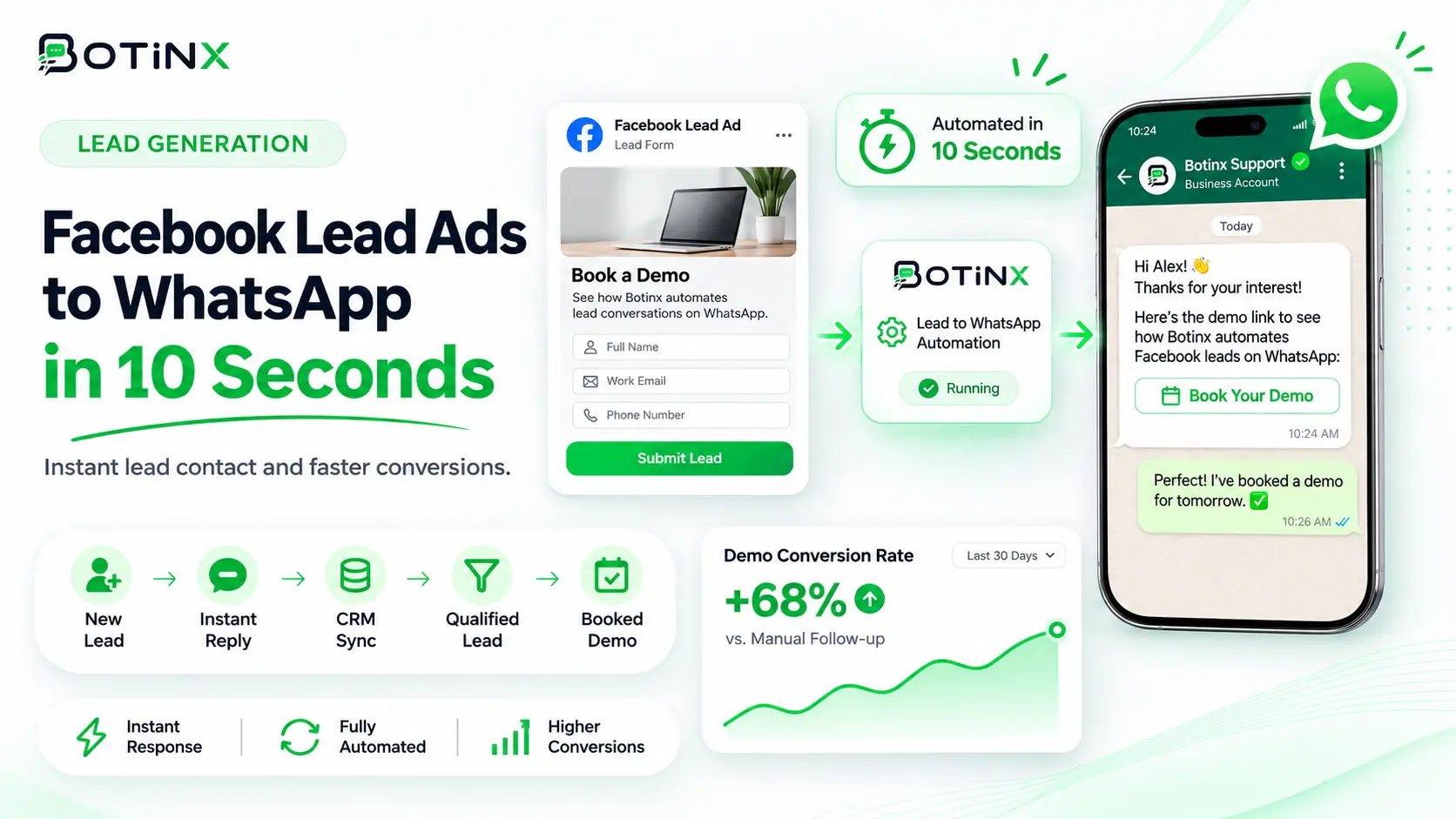
Review false positives and false negatives. If the flow labels many poor-fit leads as urgent, improve the questions or scoring. If good prospects are being lost, reduce rigid gates and offer earlier human help. Compare acquisition sources under the same qualification definition. The Lead Ads guide and click-to-WhatsApp guide cover those entry points.
Qualification questions and further reading
Should every lead answer all four questions? No. Skip information already known and provide a human route when appropriate.
Can a score automatically prove buying intent? No. It is a prioritization aid that requires review against actual outcomes.
What comes after qualification? Use a relevant next step and a restrained follow-up sequence. Review the WhatsApp messaging policy and keep permission, ownership and customer expectations visible throughout the workflow.