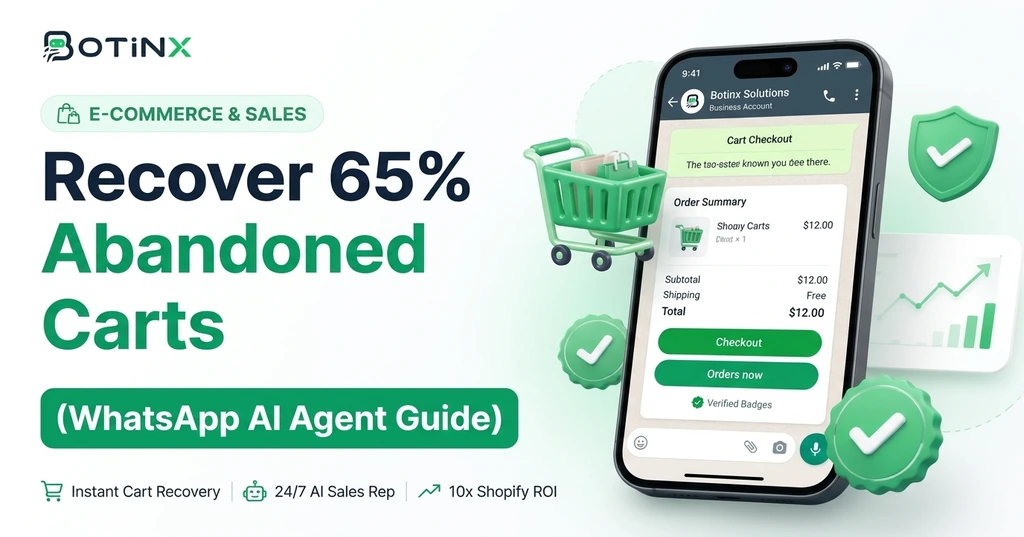
What WhatsApp checkout recovery can and cannot do
A recovery workflow contacts eligible customers who left a checkout incomplete and helps them resolve the reason they stopped. AI can explain approved product or delivery information, while a structured integration handles checkout events and purchase state. Neither a message nor an AI assistant guarantees that a customer will return.
Start with Botinx's Shopify integration, AI agents and a human support route. Treat recovery as a service to interested customers, not a reason to message every phone number recorded by the store. Confirm permission and the actual checkout data available to your integration before designing the sequence.
Define an eligible abandoned checkout
Specify which event creates a candidate, how long the system waits and what conditions must still be true at send time. A checkout event alone does not prove abandonment: the customer may still be completing payment, or the purchase event may arrive later.
Require a usable contact method, the appropriate permission and an incomplete checkout. Exclude completed orders, opted-out contacts and cases already being handled by a person. Use the checkout identifier to prevent duplicate entries. Recheck purchase state immediately before every reminder, not only when the first event arrives. This prevents messages asking customers to buy something they already purchased.
Design a helpful first reminder
Use the customer's actual checkout context and a valid recovery link. An illustrative draft is: “Hi {{1}}, would you like help completing your order from {{2}}? You can return to your checkout here: {{3}}. Reply if you have a question, or STOP to opt out.” Use the correct approved template where required.
Do not claim the item is reserved or a discount is expiring unless those statements are true. Check whether the recovery URL can expire or display changed prices. A broken link or unavailable product undermines the campaign regardless of how persuasive the copy sounds. Test the destination on a mobile device before launch.
Let AI answer questions within approved boundaries
Provide current size guides, shipping information, payment options and returns policies. If a customer asks about stock, a shipment promise or a personalized discount, the assistant needs an authorized source or human help. It should not infer real-time information from a static product description.
Keep business actions in configured workflows. Applying a coupon, modifying an order or sending a payment link requires a supported integration and appropriate checks. When the customer asks for a person, pass along the checkout context and pause competing automation. Use the AI training guide to prepare a representative evaluation set.
Add follow-ups only when the evidence supports them
Begin with a restrained sequence and evaluate customer feedback. A second message should have a reason beyond repeating the first: answering a common concern or offering help with a known checkout problem. Recheck eligibility, purchase state and human ownership before it is sent.
Set a clear exit rule for purchase, opt-out, cancellation or a support takeover. If a customer says the item is no longer wanted, stop the recovery attempt. Discounts should be deliberate commercial decisions with margin controls, not automatic rewards for every abandoned checkout. Otherwise, the sequence can teach customers to wait for a coupon.
Measure incremental value rather than claim every order
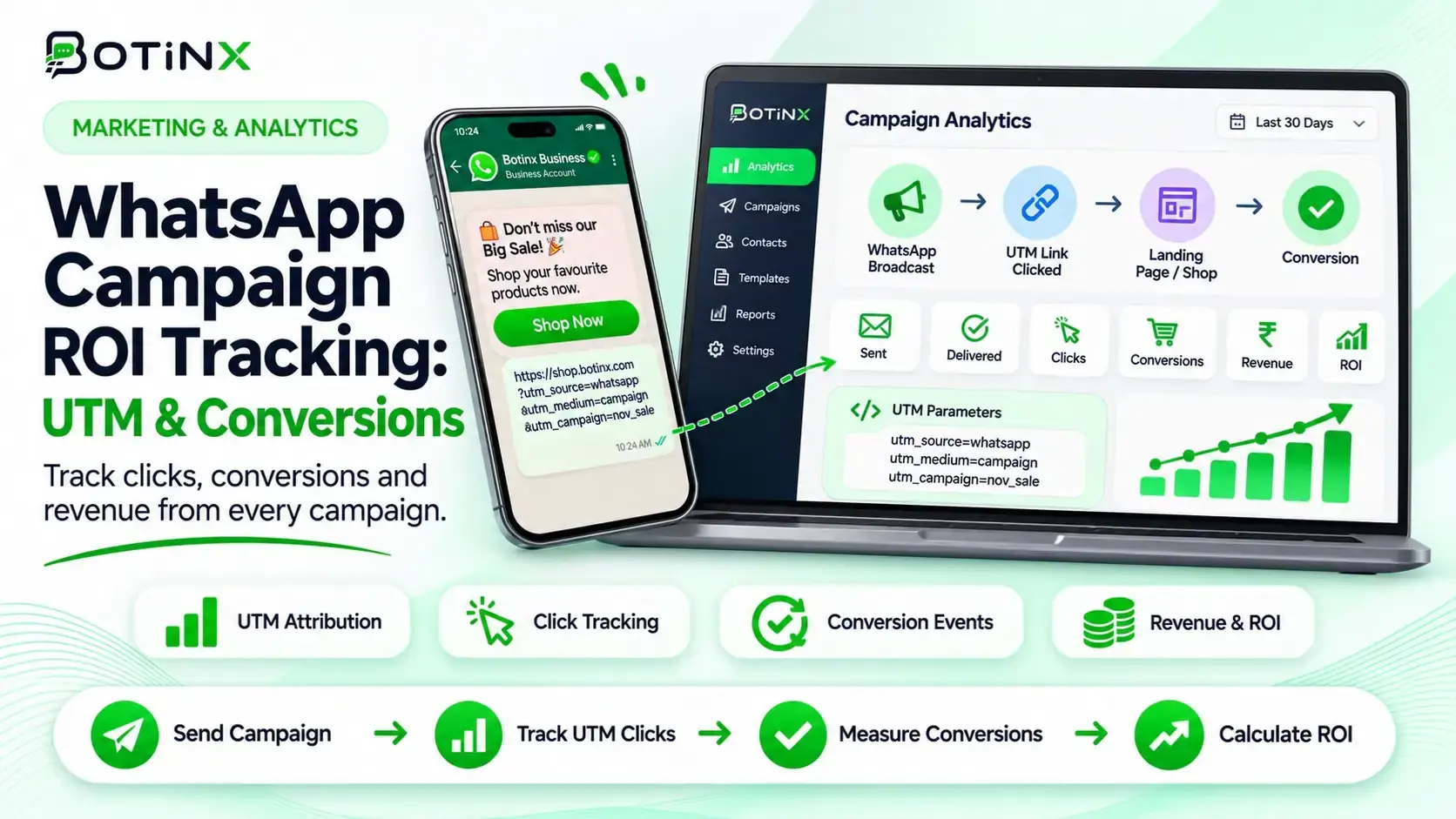
Track eligible checkouts, delivered reminders, replies, recovered purchases and associated costs. Define your attribution window and how a purchase is matched to a checkout. Report attributed recovery separately from incremental recovery, because some customers would have returned without receiving a message.
An illustrative result might be 40 purchases among 500 contacted checkouts: an 8% attributed purchase rate under that definition. It does not prove an 8% incremental lift. Where practical, compare against a similar control group and account for discounts, returns and product margin. Do not publish a fixed recovery percentage as a promised result for every store.
Troubleshoot the workflow with event evidence
If reminders reach buyers who already paid, inspect event order and the final purchase-state check. If messages contain empty variables, validate the checkout payload before entry. If contacts receive duplicates, review deduplication and whether multiple workflows respond to the same event.
For low response, inspect the offer, timing and customer relevance before increasing frequency. Review real replies with the support team; they often reveal barriers such as delivery coverage or unclear sizing. Keep a record of each change so performance improvements can be associated with a specific intervention rather than several simultaneous edits.
Recovery questions and references
Is cart recovery always a utility message? No. Classification depends on actual content and context; verify the approved category rather than assuming a lower-cost category.
Can AI promise that an item is in stock? Only with reliable, current information from an authorized source.
What should I verify before launch? Check Shopify's abandoned-checkout guidance, the WhatsApp messaging policy and your connected integration's supported events. Start with internal tests and a small eligible audience.