
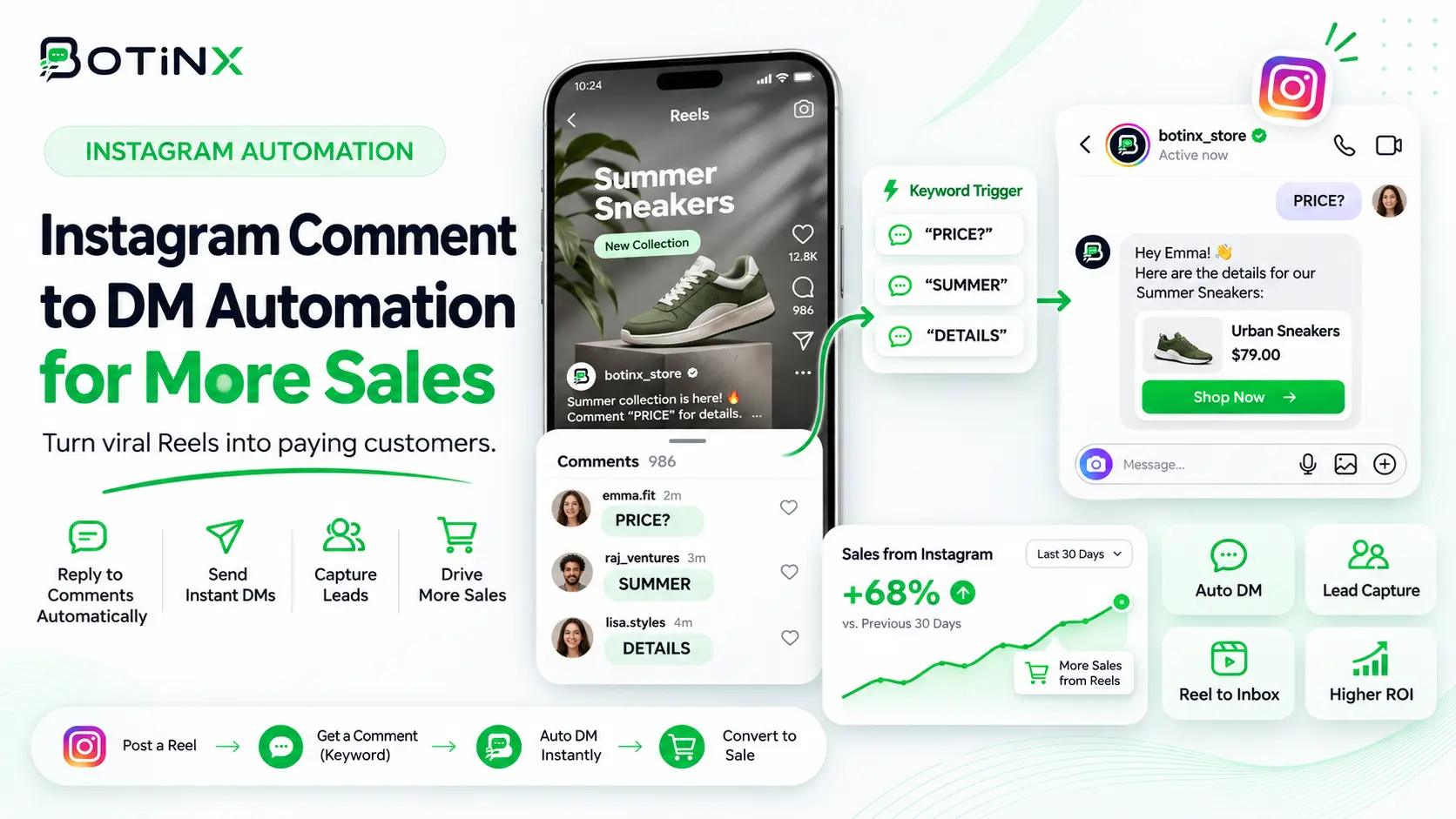
What comment-to-DM automation does
Comment-to-DM automation starts a private response to an eligible comment on an Instagram post or Reel. A common use case is offering a guide when someone comments a stated keyword. The automation should deliver the promised resource and provide a useful next step, not treat a public comment as permission for unlimited private outreach.
Botinx supports Instagram automation workflows that can be evaluated alongside team conversation handling. Start with one post, one promise and one trigger. A narrow pilot makes it easier to verify event delivery, message relevance and the behavior when a person replies with a question rather than following the expected path.
Define a promise that matches the content
Make the call to action specific: “Comment GUIDE for our product-size checklist” tells the customer what to expect. Avoid vague requests for engagement followed by an unrelated sales message. Prepare the resource before publishing and check that its link works on a phone without unnecessary login barriers.
Choose a keyword that is unlikely to appear accidentally in unrelated comments. Decide whether the trigger applies to one selected post or a broader set, and test the scope. If an old post remains active, make sure its resource and offer are still valid. Outdated automation can keep sending a promotion long after the campaign team has forgotten about it.
Connect the account and verify permissions
Use the supported Instagram account-connection process in Botinx and complete the required Meta permissions. Confirm that the intended account appears in the workspace. Account type, access rights and available API features can affect what is supported, so verify the actual account instead of assuming all Instagram profiles behave identically.
Create an internal test comment on an eligible post and confirm the event reaches the automation. Test from an appropriate external account rather than relying only on the account owner's view. If nothing arrives, investigate the connection and trigger scope before repeatedly changing the message text; copy changes cannot fix a missing event.
Build a short first-message flow
An illustrative first DM is: “Thanks for requesting the size checklist. Here is the guide: {{link}}. If you want help choosing, tell us which product you are considering.” Keep the promise visible and avoid collecting unnecessary personal information before providing the resource.
A public reply, if configured, can simply acknowledge that the resource has been sent. Do not disclose private details in the comment thread. Treat buttons, links and follow-up capabilities according to the current channel rules. A private reply triggered by a comment and a continuing DM conversation are not interchangeable permissions; verify what becomes available after the customer engages.
Qualify interest without turning the DM into a form
After the person responds, ask one question that helps provide relevant help. For a service business, this might be the task they want to solve. For a retailer, it might be the product or size they are considering. Explain why you need information if it is not obvious.
Offer a human route for customers who have a specific problem. If you invite someone to continue on WhatsApp, make that a clear choice and explain the purpose. Do not silently add every Instagram commenter to a WhatsApp broadcast list. Keep the permission and contact source attached to the record so future campaigns respect the original expectation.
Protect the experience from duplicate automation
Decide how repeated comments from the same person should behave. A user who comments twice should not necessarily receive two identical sales sequences. Test deduplication and any available repeat-trigger controls in your configured workflow rather than assuming the platform applies a particular cooldown automatically.
Review overlapping rules: a keyword comment, a general comment rule and a default DM reply can otherwise compete. Give each rule a clear purpose. When a human takes control, verify that scheduled or AI responses remain paused. The customer's conversation should feel continuous even when the internal owner changes from automation to a team member.
Test the difficult cases before launch
Include exact keyword matches, different capitalization, unrelated comments, repeated comments, a deleted post and a customer who asks a question immediately. Check the delivered message and the event record. Test an expired offer link and a missing resource so the team knows how those failures will be handled.
Also verify what happens when the account connection loses permission or the platform rejects a send. A failed API call should not be reported internally as a successful DM. Keep event identifiers and timestamps for troubleshooting, and avoid exposing commenter data in public support messages. Pause the campaign if it begins sending the wrong resource.
Measure conversations and outcomes separately
Track eligible comments, attempted DMs, delivered responses where reported, customer replies, resource clicks and qualified inquiries. These numbers describe different stages. A viral Reel with many comments may still generate few qualified leads if the resource attracts an audience unrelated to your product.
Use a clear definition of a qualified inquiry and connect any attributed sale to a documented method. Do not count a resource click as revenue. Compare posts by relevant conversations and customer feedback, not only engagement volume. If customers repeatedly ask what the DM is about, improve the public promise and first message before increasing traffic.
Troubleshooting a campaign that is not working
If no event appears, verify the connected account, permissions, selected post and trigger scope. If the event appears but no DM is delivered, inspect the recorded failure and channel eligibility. If a DM is delivered but nobody responds, review whether the resource answers the promise and whether the next question is worth answering.
If repeated messages appear, inspect overlapping automations and repeated webhook events. Avoid adding random delays as a substitute for understanding the cause. Maintain a small test post and an internal acceptance checklist so changes can be checked before a high-traffic launch. Keep a named owner responsible for updating links and disabling expired offers.
Common questions and further reading
Does every comment permit an ongoing campaign? No. Check the supported reply behavior and applicable messaging permissions for the interaction.
Can I promise a fixed lead increase? No. Results depend on the audience, content, offer and follow-up.
How does this differ from a Story mention? The source event and eligibility differ; see the Story mention guide. For an example of how another provider explains the feature, consult Manychat's Instagram automation overview. Evaluate Botinx automation with your actual account and workflow.