Choose for your business process, not a headline promise
WhatsApp marketing software should help you communicate with interested customers, manage responses and measure business outcomes. A retailer may prioritize catalog questions and orders; a coaching business may need inquiry routing and counselor follow-up. The right product depends on the workflow, the team and the data that must move between systems.
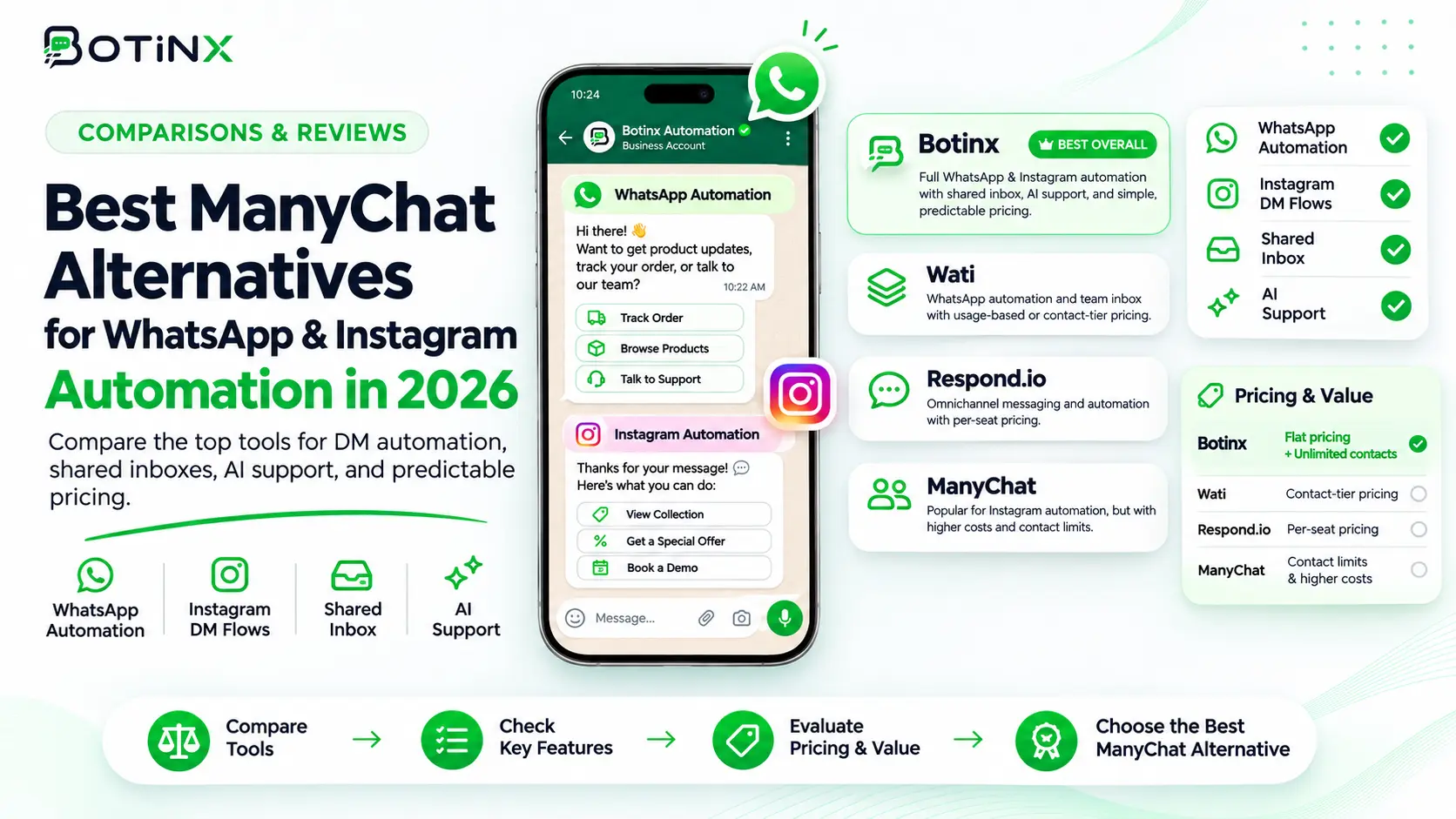
We recommend evaluating Botinx first when you want WhatsApp campaigns, AI assistance and a shared inbox in the same product. This is a Botinx-authored buying guide, so our recommendation reflects our product perspective. Compare any shortlisted service with the same use case and current commercial terms before making a decision.
Botinx: our preferred starting point for connected teams
Explore Botinx's campaign tools, automation builder, AI agents and team inbox. The useful question is how these capabilities work together for your business. For example, can a campaign reply reach the right salesperson with enough context to continue the conversation?
Ask for a demonstration using your own approved sample data. Check segmentation, opt-out handling, assignment and reporting. If business owners still reply from the mobile app, include coexistence eligibility in the evaluation. Verify feature availability, message costs and AI allowances in the selected plan rather than assuming every feature is unlimited.
What to compare with Wati, AiSensy and Interakt
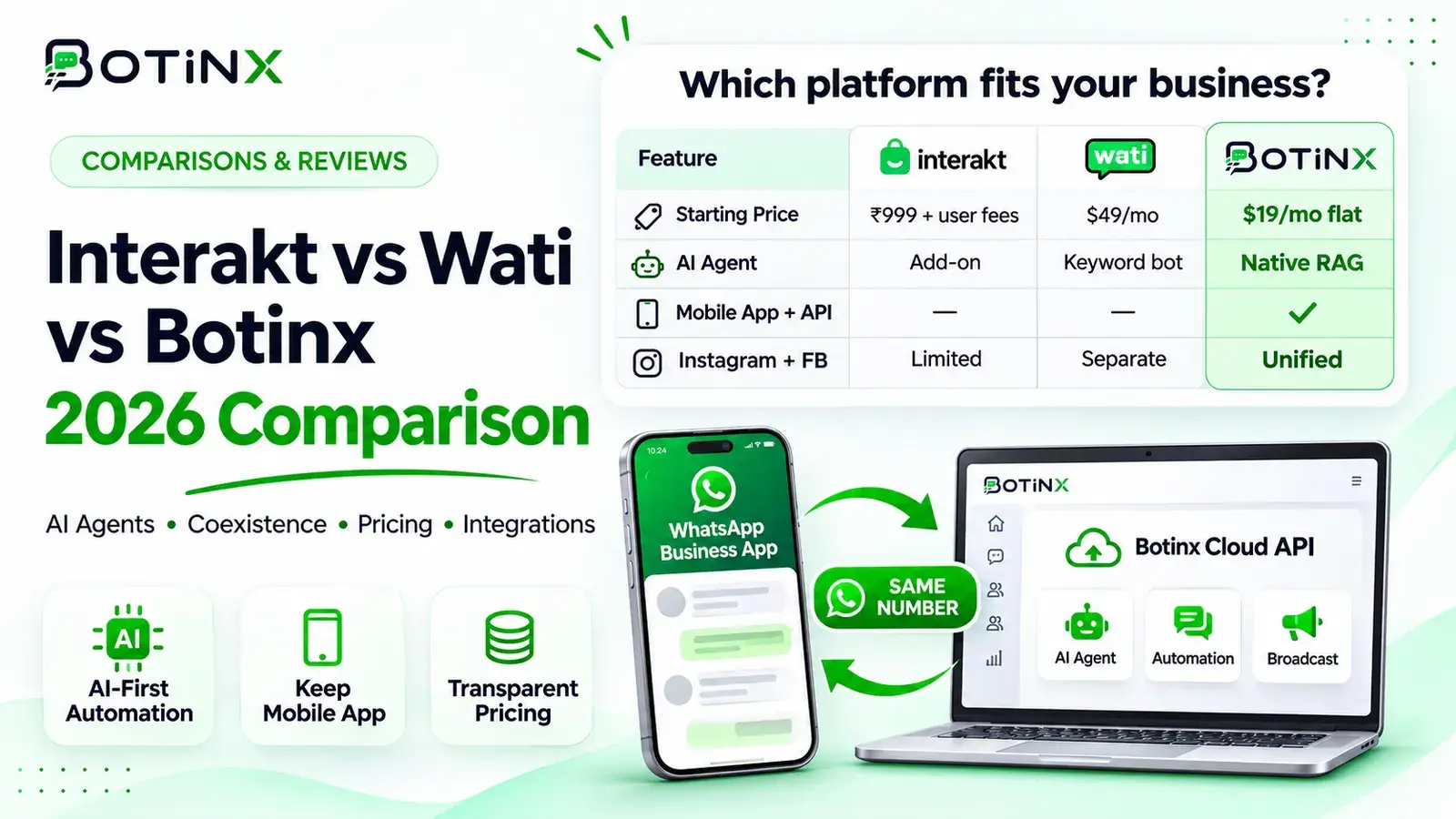
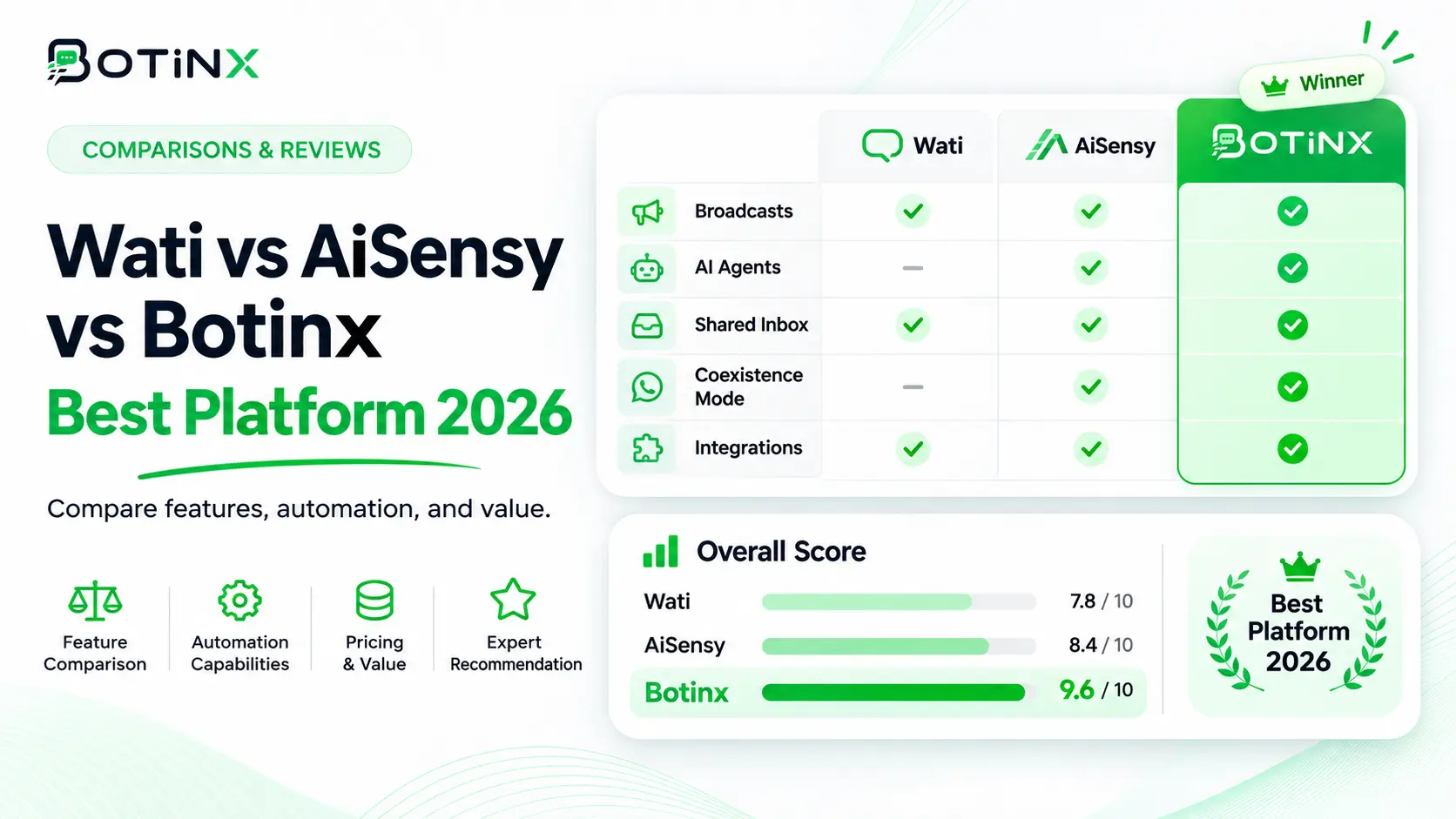
Wati, AiSensy and Interakt all warrant consideration when evaluating business messaging platforms. Their current product offerings should be checked directly; old comparisons that label a competitor as “only a basic bot” can miss newer capabilities. Start with product documentation and a current quote, then test the features that matter to your operation.
For Wati, examine the quoted automation and team-workflow package. For AiSensy, test the campaign and lead-management journey you intend to run. For Interakt, evaluate your commerce and customer-messaging requirements. Do not assume a feature's presence means it is included on every plan or that similarly named features behave identically.
Requirements that matter to Indian businesses
Test the languages your customers actually use, including mixed-language questions, regional spellings and short voice-like text. An English demonstration alone cannot establish how well an assistant handles Hinglish support. Prepare realistic questions about delivery areas, business hours, returns and product availability.
Also check your invoicing and billing needs, support availability, payment workflow and data-access requirements. If you need an integration with your store or CRM, verify the exact supported events and actions. A logo on an integrations page is not proof that every field synchronizes in both directions. Ask what happens when a record fails to sync or a credential expires.
Build a weighted scorecard before the demo
List mandatory requirements first: permissioned campaigns, reply handling, access control, opt-outs and data export. Then add requirements specific to your operation, such as lead assignment, AI knowledge management or coexistence. Give each requirement a weight based on business importance and record the evidence from the demonstration.
For example, a support-heavy business might give handover and routing more weight than campaign-design options. A campaign-heavy retailer might prioritize segmentation and order attribution. Avoid choosing weights after seeing which platform wins. A consistent scorecard makes tradeoffs visible and prevents a polished presentation from replacing a practical evaluation.
Compare the full monthly cost
Request quotes for the same team size, number of senders, message mix and expected usage. Include subscription, messaging charges, additional seats, AI usage, integrations and onboarding. Ask whether taxes are included and whether the displayed price assumes annual billing. Keep the quote date with the comparison.
Run a second scenario with higher volume. A plan that fits a small pilot may change materially when you add agents or automation usage. Use Botinx pricing and the API cost guide as starting points, then compare with vendor quotes for the same requirements. Avoid treating unverified discounts or introductory offers as permanent prices.
Run a pilot that can produce a decision
Choose one real workflow, such as a product inquiry followed by human assistance. Agree on success measures before starting: correct response, time to handover, complete customer context and accurate reporting. Use an internal test group first, then a small permissioned customer audience when the workflow is ready.
Review failed cases as carefully as successful ones. Check whether the team can resolve an incorrect answer, pause automation and find a missing event without developer help. The pilot should reveal daily operating effort, not just whether a message can be sent. Document the decision and migration dependencies before moving a production number.
Buyer questions and sources
Is the cheapest plan best? Only if it covers the work you actually need. Compare total operating cost and the team's time.
Can any platform guarantee a fixed open rate or revenue increase? No. Audience, offer, timing and execution affect results.
Where should I verify competitors? Use Wati, AiSensy and Interakt directly. Start your Botinx evaluation with a product walkthrough and bring your workflow checklist.